Tunneling, reinvented.
Three breakthroughs from The Boring Company change what tunnels cost, how fast they go in, and how safe they are to build.
It already works
The Boring Company's all-in cost target for a Loop tunnel with Prufrock.
Our proposed partner: The Boring Company
We are advocating that Illinois invite The Boring Company to bid on and help build this network. Here is what is publicly known about their work:
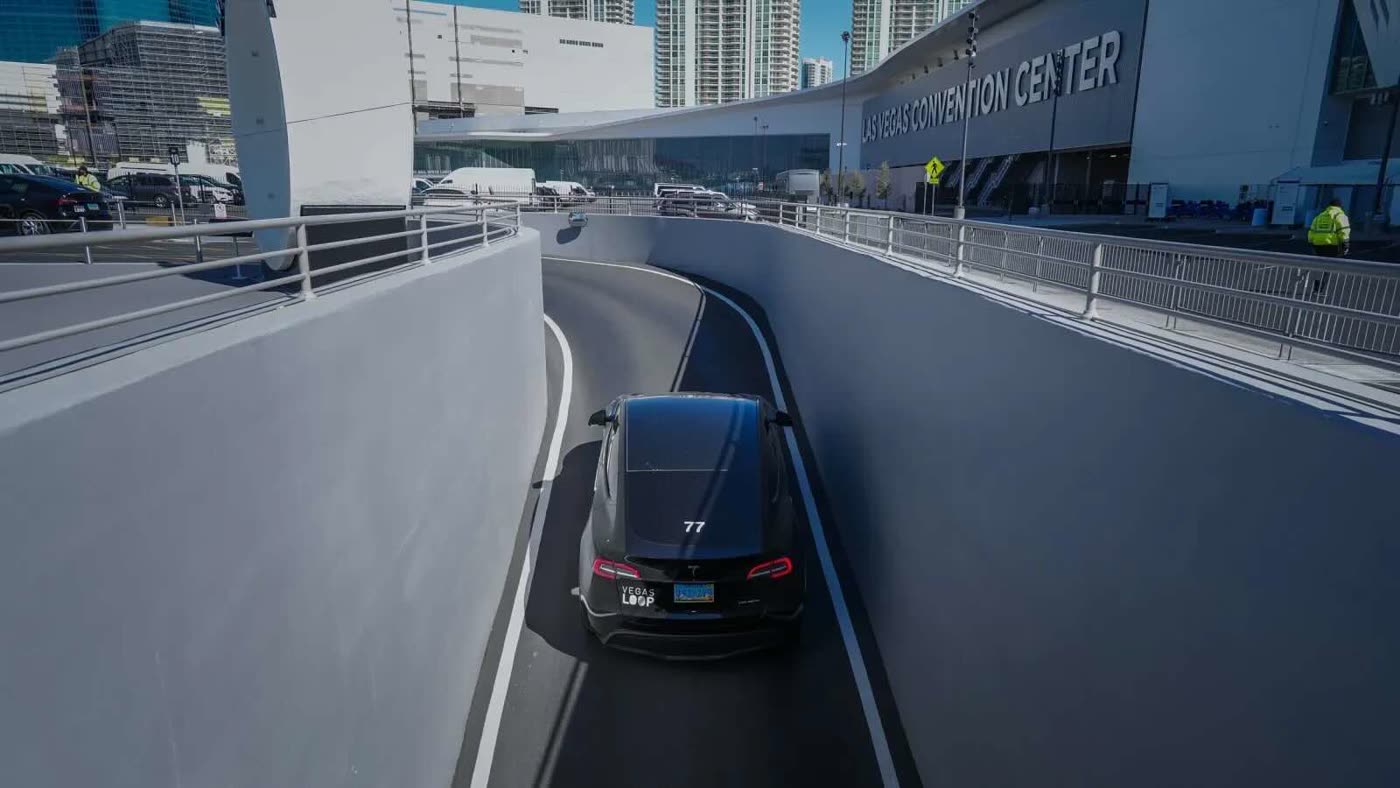
LVCC Loop
An underground system beneath the Las Vegas Convention Center campus, opened in 2021, carrying visitors in Tesla vehicles between convention halls through twin tunnels.
Vegas Loop
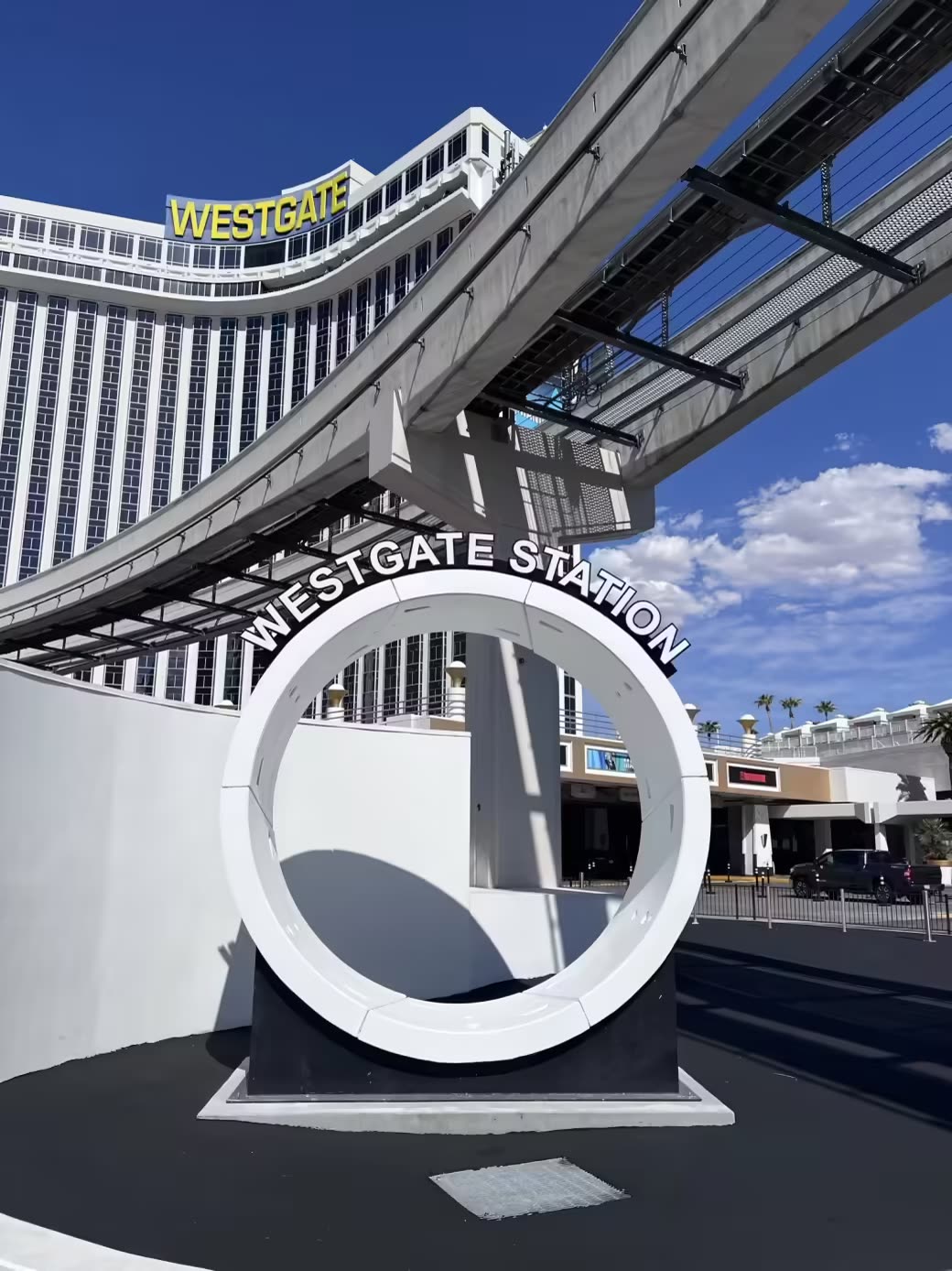
A larger network approved by Clark County to expand the system across the resort area and downtown Las Vegas, with new stations opening over time, including service to resorts.
Prufrock
The Boring Company's tunnel boring machine line, designed to launch from the surface ("porpoising") rather than requiring a deep launch pit, with the goal of much faster tunneling than conventional machines.
Windy City Loop is an independent citizen campaign and does not speak for The Boring Company. We have no formal agreement with The Boring Company, but we have met with them many times, and they support our efforts for Chicago. Chicago previously selected The Boring Company in 2018 for a proposed O'Hare Express; that project did not move forward. We think the case deserves a fresh, transparent look. See their own site, boringcompany.com, for current details.


Zero People In Tunnel
The Prufrock boring machine is designed to run with zero people in the tunnel during normal operations, controlled remotely from an Operations Control Center. Taking workers out of the tunnel dramatically reduces the safety risk of tunneling. The Boring Company calls it "the safest, fastest, and least expensive method of tunneling."
Continuous tunneling
Traditional soft-soil machines mine about 5 feet, stop, install the concrete lining, and start over. Prufrock is designed to install the lining while it keeps mining, so the machine never has to stop.
Standardized design
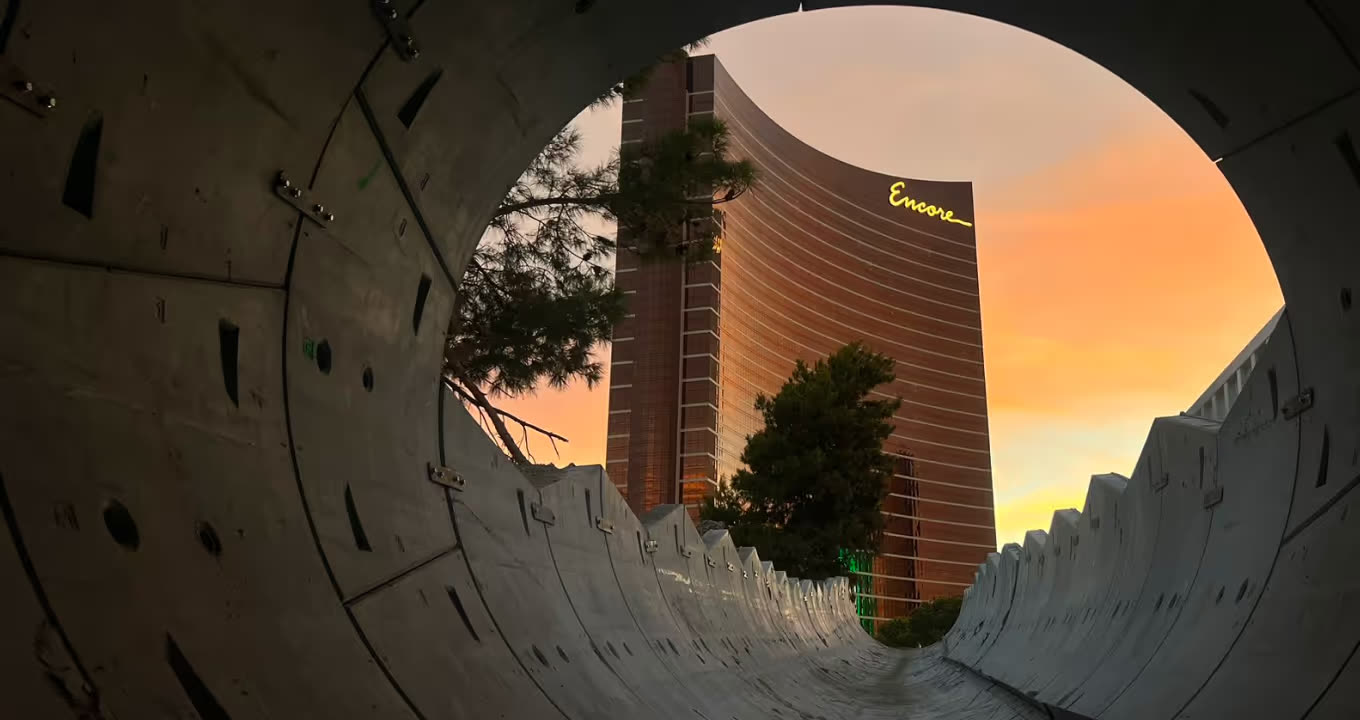
The tunnels are all essentially the same tunnel, about 14 feet in diameter (published Loop specs: 13.5 feet outside, 12 feet inside). Because every tunnel is the same, there is no redoing the MEP (mechanical, electrical, and plumbing) engineering plans for each situation. One repeatable design speeds engineering and permitting and cuts cost. The Boring Company says it keeps the same diameter on all projects to avoid "reinventing the wheel" each time.
A road, underground
Each tunnel is a ring of concrete about 13.5 feet across on the outside and 12 feet on the inside. Inside is a flat road surface about 9.5 feet wide that the vehicles drive on. With no tracks or electrified third rail, the whole road surface also serves as a wide emergency walkway.
Bonus use: under our proposal, the space beneath the road deck could carry fiber lines and other city utility conduits, adding capacity without digging up streets.
Electric cars today, more tomorrow
Today: Tesla vehicles
Loop systems run fleets of Tesla vehicles. In Las Vegas, Model 3s and Model Ys carry up to three passengers and Model Xs carry up to four. Nashville's Music City Loop plans to start with Model Ys and Model Xs.
Coming: a high-occupancy van
The Boring Company's president has said the Tesla Robovan will join the Vegas Loop once the system is built out, mainly for big events like stadium games when many riders are headed to the same place.
Long term: any approved autonomous EV
Our proposal is that, over time, any approved autonomous electric vehicle could use a Chicagoland network. The Boring Company has described Loop as built around compatible autonomous electric vehicles.
Safe under buildings
Tunneling happens below the city's utilities. The Boring Company says utilities generally sit within about 5 to 15 feet of the surface, while Loop tunnels typically run around 30 feet down. Our diagram shows the utility zone to about 20 feet as a conservative buffer. Where needed, tunnels can go deeper: one Boring Company project study planned 30 to 70 feet, deeper if necessary.
Proven under crowds
The Las Vegas Convention Center Loop was tunneled during large conventions with zero road closures and zero attendee disturbances, according to The Boring Company. It says its tunneling beneath packed convention halls was imperceptible to attendees.
Precise to about 2 inches
The Boring Company says its machines use a redundant navigation system accurate to within 2 inches, and that it adds sensors wherever a tunnel passes close to a utility.
Under buildings, even tall ones
Tunnels routinely pass beneath buildings in cities worldwide. Our proposal is that, with geotechnical study, settlement monitoring, and depth matched to each foundation, a Chicagoland network could pass beneath buildings including skyscrapers. The Boring Company says a TBM below about 28 feet is almost impossible to detect at the surface.
A lined, supported structure
As the machine bores, it replaces the excavated soil with a continuous ring of precast, steel-fiber reinforced concrete segments. The finished tunnel is a lined, engineered structure designed to carry the ground loads around it.


Room for utilities too. Because the tunnels run below today's crowded utility zone, our proposal would use the space under the road deck for fiber and other utility conduits. The Boring Company separately offers dedicated utility tunnels designed to house utilities without surface disruption (Construction Dive); running conduits inside a Loop tunnel is the campaign's idea, not a published Boring Company design.
Chicago already lives underground. The old Chicago Tunnel Company freight tunnels ran about 40 feet below nearly every downtown street (Illinois Railway Museum), and MWRD's Deep Tunnel has 110 miles of tunnels 150 to 300 feet underground (MWRD).
How continuous tunneling works
Digging and building happen at the same time. All of it is run from the surface.
Bore
The cutterhead spins and grinds through soil and rock at the front of the machine.
Muck out
An auger feeds the excavated material onto a conveyor belt that carries it up to the surface.
Segments in
Precast concrete wall segments, each about 4,000 lb, ride in underneath on a remote-controlled liner truck.
Robot arm installs
At the front, a robotic arm picks up each segment and sets it in place, like Lego blocks, while the machine keeps boring.
More capacity, far less cost
Cost
| Item | Typical cost |
|---|---|
| U.S. tunneled transit | Often hundreds of millions to several billion dollars per mile; China builds subways for a fraction of U.S. costs (Transit Costs Project) |
| Loop tunnel (Prufrock) | Target of less than $5M per mile all in (TBC), trending lower over time |
| One highway lane | Roughly $1M to $4M per mile |
| A subway station | Roughly $250M to $500M |
| A Loop surface station | Roughly $1M; a parking lot style station about $400K to $1M |
| A Loop subsurface station | Roughly $5M to $15M |
Figures without a link are campaign estimates. Hauling away excavated dirt is a meaningful share of any tunnel's cost, roughly 15 to 20 percent, which is one reason The Boring Company works to reuse it.
Cars beat buses and rail
Nonstop moves more people
It is a common misconception that buses carry more. Nonstop cars that never run empty and carry less mass can move more people per hour with less energy, because no one waits through other people's stops.
Zero wait
Off peak, cars wait for riders at stations. The Boring Company's president says the Vegas Loop median wait is zero seconds and the mean is 20 seconds.
No stops, no red lights
A rail line with 20 stops can take an hour. A short Loop trip starts at a station near you and ends within about 100 feet of your destination. Speeds run about 40 mph on short hops and, per TBC, just above 60 mph on longer runs like the airport.
Capacity
Roughly what Music City Loop could open with, potentially more over time. Busy-day Vegas planning splits loads like 5,000 an hour at the convention center, 1,000 to 2,000 at hotels, and about 10,000 at the airport.
Neighbors won't notice
No lane closures
Tunneling itself does not shut traffic lanes. The only surface work along the route is brief, typically overnight, soil borings. The LVCC Loop was tunneled during conventions with over 100,000 attendees and zero road closures.
No noise or vibration
At typical depths of about 30 to 90 feet, a person walking on the sidewalk next to you causes more vibration. The Boring Company says a machine below about 28 feet is almost impossible to detect.
Monitored and inspected
Surface settlement is monitored at close intervals along the route, roughly every 50 feet, and tiny movements trigger an immediate stop. Inspectors from the county, fire department, and third-party concrete, rebar, and grout testing are typically on site, often outnumbering workers. Shallow tunnels are preferred where possible to make surface connections easy.
Built for Chicago weather
Sealed below the water table
In Las Vegas, nearly all tunneling is below the water table, which sits roughly 8 to 20 feet down, while tunnels run about 30 feet down. Gasketed concrete segments seal out water locally with no effect on water quality, and Vegas flooding has not affected the system.
Nearly weatherproof
Snow, ice, and storms stay on the surface. The Boring Company says a tunnel is one of the safest places to be in an earthquake, protecting against falling debris.
Neighborhoods stay whole
Surface highways divide neighborhoods. Tunnels go under them. Environmental review of Loop projects covers geology, endangered species, water, cultural, visual, and aquatic resources.
Designed with fire and police
Exits close together
Clark County's Vegas Loop fire code limits exits to 1,250 feet apart, or up to 2,500 feet with fire response vehicles and cross passages. That works out to about every 1,000 feet on average.
Water for firefighting
An automatic standpipe system with hose connection vaults no more than 160 feet apart, plus redundant bidirectional ventilation to push smoke away from evacuating riders.
Room to work
A roughly 10 foot clear path lets firefighters move freely, compared with about 3 feet on many rail systems that also carry a 600 to 1,100 volt third rail. Small cars are easier to evacuate than large vehicles.
Drilled and recognized
Regular practice drills with police and fire departments, and a DHS/TSA Gold Standard Award for security planning (Vegas Loop scored 99.51).
Red tunnel lighting signals cars to stop if there is ever an issue (TBC). The system has carried millions of riders without a fire.
Freight in tunnels
Looking further ahead, the same kind of tunnels that carry riders could someday carry goods. Semi-trucks, shipping containers, and big boxes could travel underground, off city streets and out of expressway traffic, and freight trains could run in purpose-built tunnels sized for them. Moving deliveries below the surface could mean fewer trucks competing with cars and buses up top.
The Boring Company recently showed a shipping container making it through a tunnel in a post on October 19, 2026:
Freight is the campaign's vision of future potential, not a current Boring Company offering or a plan for Chicago. Any freight use would need its own study, design, and approvals.
Boring Company projects
| Project | Status | Details |
|---|---|---|
| Vegas Loop | Open and expanding | More than 4 million passengers through 14 stations, 2 to 8 minute trips; 68 miles and 123 stations approved |
| LVCC Loop | Complete and operational | 1.7 miles, 3 stations, built in about 1 year for about $47M (firm fixed price); peak of over 4,500 passengers per hour and 32,000 per day |
| Music City Loop (Nashville) | Under construction | Privately funded, downtown to the airport and West End |
| Dubai Loop | Under contract | Pilot phase: 6.4 km of tunnel and 4 stations |
| Cybertunnel (Tesla Giga Texas) | Complete and operational | A 60 second tunnel under an 8-lane highway, replacing a 12 minute drive |
How fast?
The Boring Company's stated target speed for Prufrock, with an all-in cost target for a Loop tunnel of less than $5M per mile. It has described Prufrock-2 as designed to mine up to 1 mile per week.
Our proposal: Chicago could potentially run 8 to 10 machines at once. For comparison, Nashville's Music City Loop has 2 Prufrock machines tunneling at once. The Boring Company says a third launches in late October 2026, a fourth is being built, and it is pushing for four in the ground by year end. It reports more than 40 stations in planning and design.
Because each machine works its own heading, more machines means more miles at once. At The Boring Company's 1 mile per week target, every machine added is another mile a week of potential capacity.
O'Hare to downtown: how long to bore?
Chicago's 2018 O'Hare Express plan with The Boring Company called for twin tunnels covering about 17 miles from Block 37 in the Loop to O'Hare (Reuters; City of Chicago). We use that 17 mile alignment.
17 miles × 2 tunnels (one each direction) = 34 tunnel miles
8 machines × 1 mile/week each = 8 miles/week
34 ÷ 8 = 4.25, or about 4 to 5 weeks of tunneling
Assumption: 8 machines work at once, 4 in each tunnel, launching from both ends and from intermediate sites so each bores its own segment of roughly 4 miles. The speed is The Boring Company's stated target for Prufrock of 1 mile per week per machine (TBC), not a measured Chicago rate.
This covers boring only. It excludes permitting, environmental review, design, launch sites, stations, fit-out, testing, and real-world slowdowns from geology. The 2018 O'Hare Express proposal did not move forward.
Speeds are The Boring Company's stated design targets. Real rates depend on geology, permitting, and site conditions. Windy City Loop has no relationship with The Boring Company.