A portal near you.
These are not stations in the transit sense. Under our proposal you are picked up at your door and dropped off at your destination. Cars use normal roads when they are clear and drop into the tunnels through these access points to skip congestion or reach final mile spots, with no connections, transfers, or stops along the way. Here is what a Chicagoland network could look like: 200 proposed access points from the Loop to Waukegan, Aurora, and Joliet.
Vegas Loop: 123 approved stations. Chicagoland: 200 proposed access points.
Vegas figure: Clark County and the City of Las Vegas have approved 68 miles of tunnel and 123 stations, per The Boring Company, after Clark County approved 19 more in August 2026 (Las Vegas Review-Journal).
Door to door, no transfers
Our proposal works less like the L and more like Uber with a superpower. You get picked up wherever you want, just like Uber, in an approved vehicle that is electric and likely autonomous: at your door, whether that is home, work, a restaurant, or an appointment, and dropped off wherever you are going. The car uses normal roads when they are clear and drops into the tunnels to skip congestion points, then comes back up to surface roads to reach your final destination.
Picked up at your door
Home, office, restaurant, appointment. Wherever you are.
Drops into the tunnel to skip traffic
A nearby portal takes the car underground, past the gridlock, nonstop.
Surfaces near your destination
It pops back up close by and drops you at the door. No connections, no transfers.
You ride in an electric car: Tesla vehicles today, with a high-occupancy van planned for big events and, under our proposal, any approved autonomous electric vehicle in the long run. Inside the tunnel, cars drive on a road surface about 9.5 feet wide. More on the technology.
Curbside portals
As simple as a handful of parking spaces converted into a ramp down into the system. Small, quick to build, and easy to fit into a neighborhood.
Garage portals
A tunnel portal that opens right into level B1 of an existing parking garage, so cars slip underground without touching the street.
Hub stations
Larger subsurface stations, with a line of waiting cars, that connect into high-traffic destinations: airports, stadiums, McCormick Place, the rail terminals, and the Loop at rush hour.
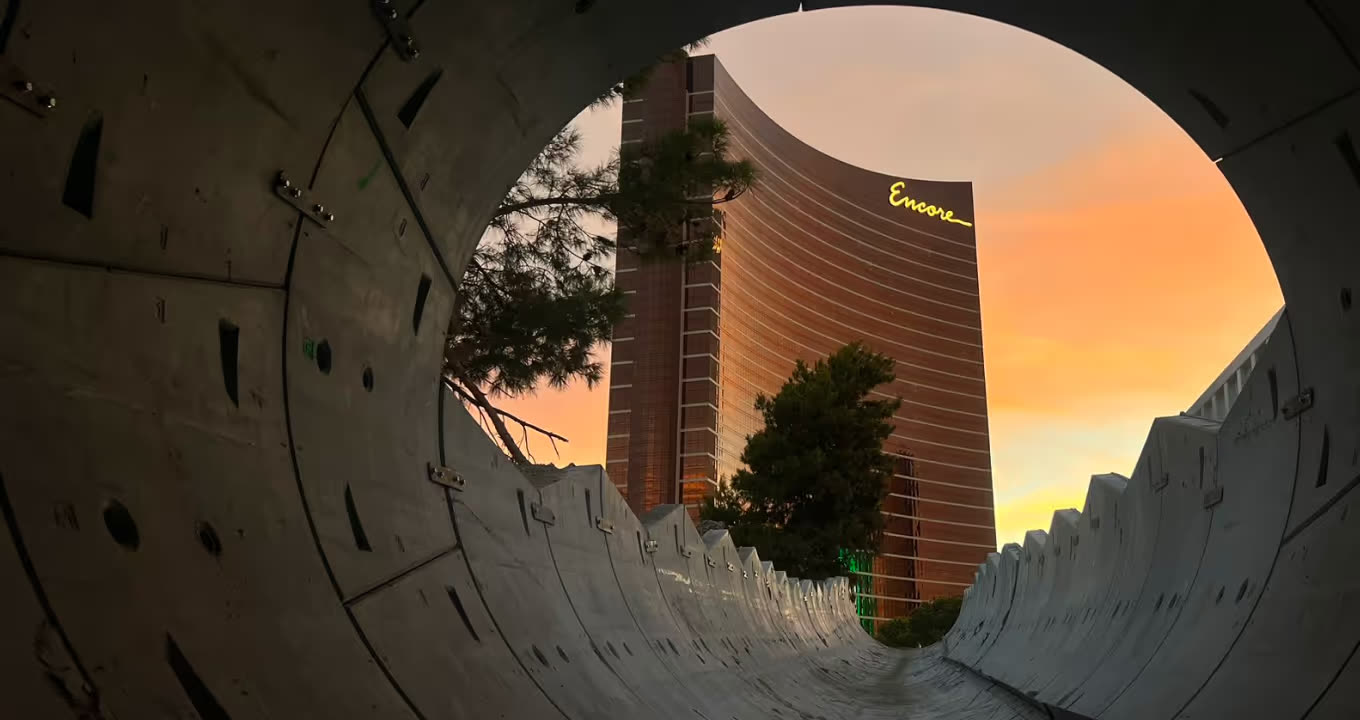
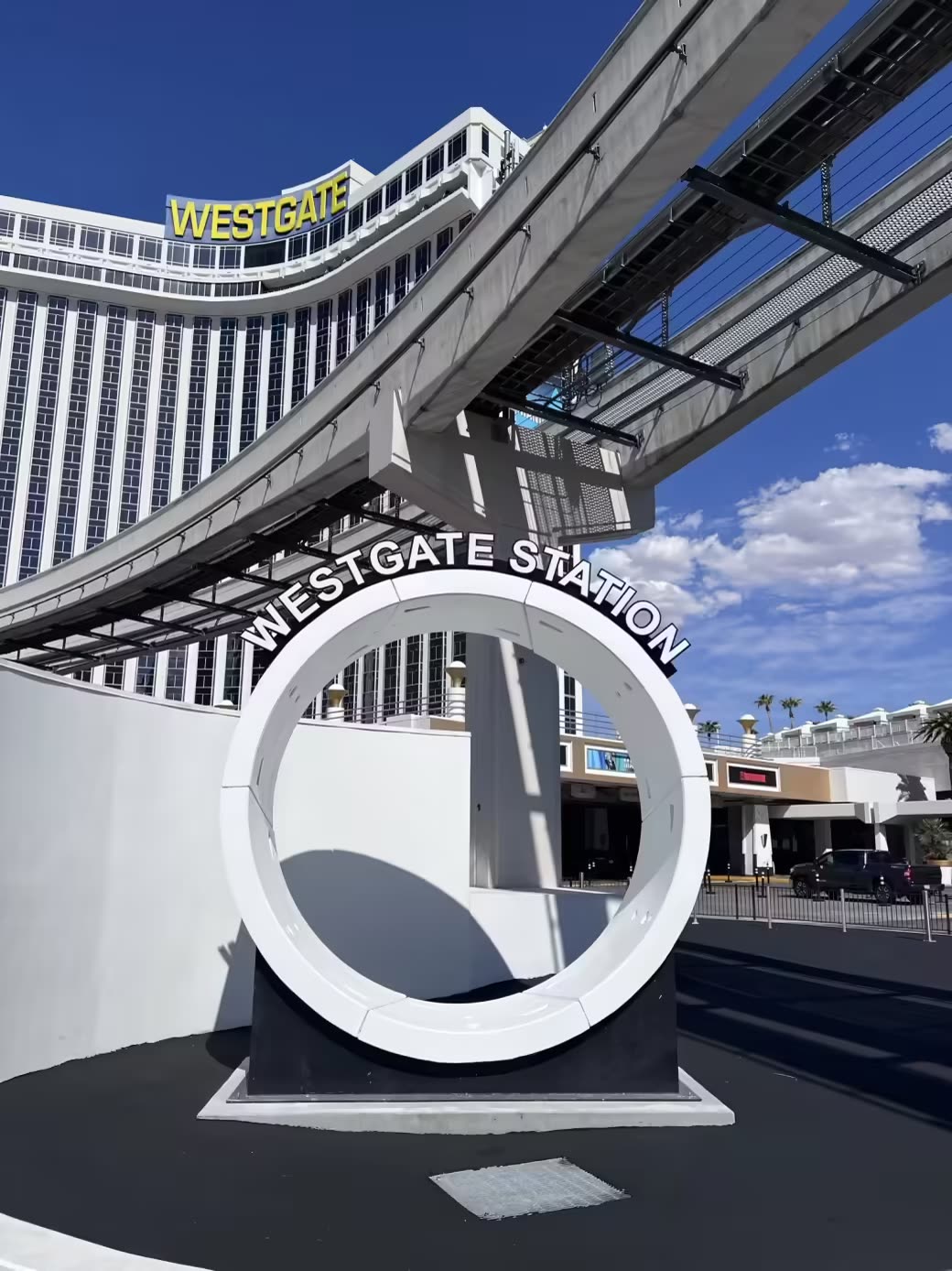

The Boring Company says Loop stations "can be as small as two parking spaces," so there is "no practical upper limit" to how many can be built (TBC, Loop FAQ).
Connecting garages, apartments, and venues
Straight into B1
A tunnel can open directly into the lowest level of an existing garage or building, so riders never go up to the street and back down. The machine can bore within inches of a garage wall, and the opening is cut later at low cost, even years later when the owner is ready.
Public, private, or TBC land
Stations can sit on public land such as a convention center, on private property, or on land The Boring Company owns. In Nashville, stations are planned with property owners, including a hotel and residential towers.
Start small
A low-use spot can begin with one tunnel and a short wait of a few minutes, adding a second tunnel later. Stadiums with private land are natural early candidates.
This is the campaign's proposal for how a Chicagoland network could work, modeled on point-to-point Loop systems. On the map, large white-ringed markers are hub stations and small markers are portals (curbside or garage); marker color shows category.
Proposed and illustrativeEvery location on this map is a proposed, illustrative concept for discussion. None has been studied, approved, or endorsed by any agency or company. Real hub and access point sites would come out of a feasibility study and public input. Map data © OpenStreetMap contributors.